I think that most of my readers know that when it comes to value wines, one does not have to look any further than Spain. I know that most of my picks for the month come from this great wine producing country. However, there are many other spots in the world to find wines of good quality without the big price-tag. Portugal is one of my go-to spots for finding such wines aside from Spain. Being Spain’s next-door neighbor probably doesn’t hurt. It is from Portugal that I have discovered an amazing red blend at a price most anyone can afford.
May Pick Of The Month
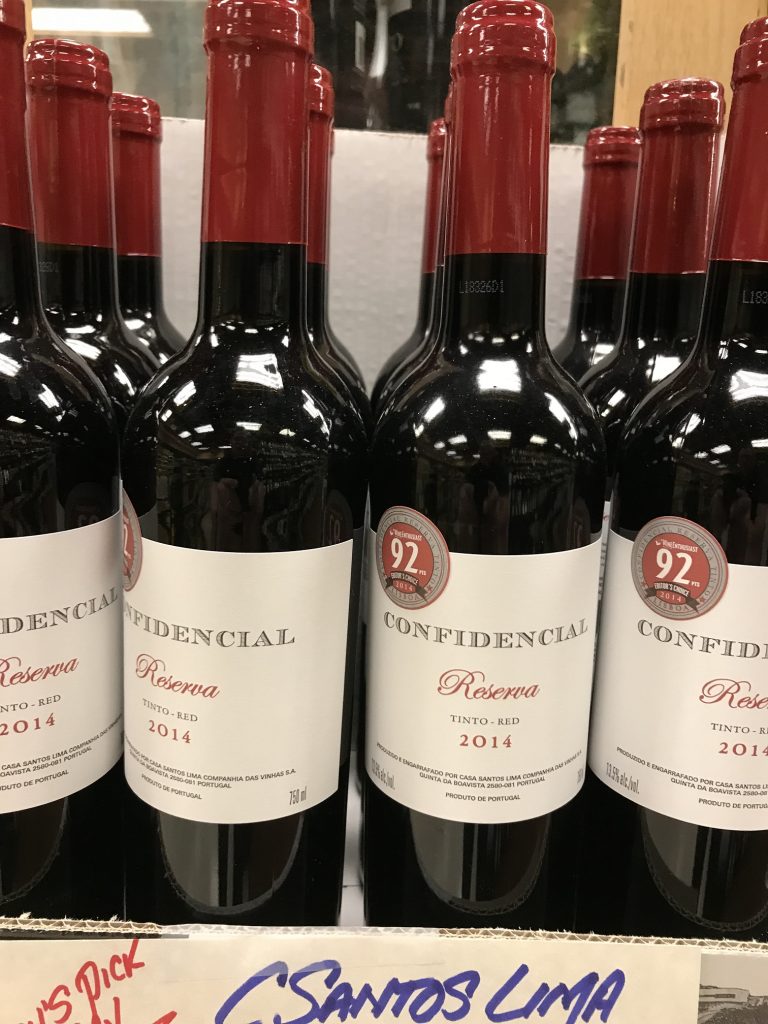
2014 C Santos Lima Confidencial Reserva Tinto (Lisboa, Portugal)… $13.
It’s called Confidencial Tinto because it’s a smart-ass way of keeping the grapes that are used in the blend confidential. That is a pet peeve of mine, but I’ll let it go this time. Whatever the blend, it has resulted in a deliciously complex red that will satisfy both the new and old world palate.
Blackberries all day on the nose with dark cherries and earth underneath, with a hit of tobacco and leather. Smooth, structured tannins, support notes of blackberry and dark cherry notes. Intense and balanced at the same time. Earth and leather lie underneath the fruit notes with a kiss of tobacco and minerals. A delicious and long finish with notes of minerals and tobacco holding court and leather coming in late. For thirteen bucks you get a whole lot of wine, with complexity, and a nice balance of fruit and minerals. I would suggest decanting this for about an hour before consumption and you will be rewarded tenfold. (B+)
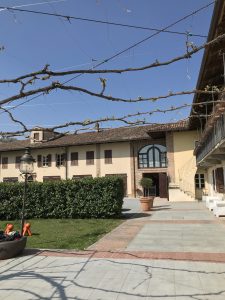
Unfortunately we were only able to visit two wineries in the Piedmont region due to scheduling issues. However our last stop before heading to the Italian Riviera was Poderi e Contine Oddero, and it was well worth the stop.
Poderi e Contine Oddero
One of the oldest wineries in Barolo, their first bottling was 1878. We were greeted by seventh generation Oddero, Isabella, granddaughter of Giacomo Oddero who at 95 years old is still deeply involved in the winery. Oddero is located in the Santa Maria, La Mora region of Barolo. Aside from vineyards located in the Barolo region, they also have vineyards in Barbaresco, which as Isabella pointed out are a little more difficult to manage because of the distance from the winery. All of the fruit they source is estate fruit with total holdings of 35 Hectares or 86+ acres. Certified organic, Isabelle spoke of the challenge of maintaining organic practices, but also noted that it is for the benefit of future generations. She also expounded on the challenge of viticulture as the effects of global warming are becoming more and more evident. She pointed out the challenges of vineyard and canopy management as temperatures increase each year. Her passion for viticulture and deep respect for her grandfather were evident.
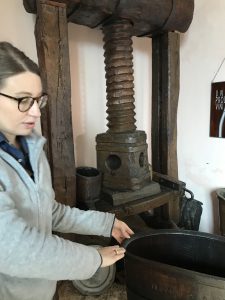
Isabella showing off the collection of artifacts used for winemaking at the winery in the past (the old olive oil press in the background)
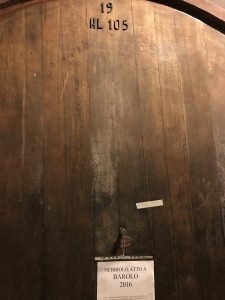
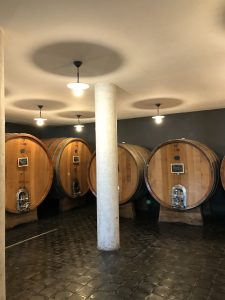
Isabelle took us into the winery and the first room was filled with artifacts that Giacomo has saved from the winery past. It was quite interesting to see the equipment used in the days of yesteryear. Oddero has not allowed themselves to be influenced by the wine critic superstars who have tried to encourage wineries to adopt new world practices in the old world. They firmly adhere to old-world practices in handling fickle Nebbiolo, the grape of Barolo and Barbaresco. Large puncheons are employed in the aging of the juice with the oldest holding 10,500 liters (this is it’s last year, being 65 years old). Their philosophy is to properly manage the vineyards, so they will produce excellent fruit and then make sure they don’t screw it up in the winemaking process. As most wineries will tell you, winemaking starts in the vineyard and Oddero practices that philosophy vehemently. They ferment each vineyard lot separately and then blend them carefully to attain the quality they are looking for.
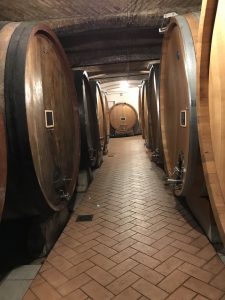
The puncheons of Oddero…Massive!
This bad boy is 65 years old and although retiring will stay in the family.
No new oak for their Barolo or Barbaresco! However, they do use new oak for their Barbera, simply because Barbera is low in tannins and it responds better to new oak. After using the barrels for a couple of years for Barbera, it is ready to nurse the Nebbiolo. Oddero is looking for expressive wines, that reflect terroir and the vintage. They are both feminine and powerful at the same time and will benefit greatly with aging.
Isabella spent some time explaining how her grandfather, Giacomo and several other wineries pulled together to protect the integrity of the Barolo region. Today, the designation D.O.C.G. for both Barolo and Barbaresco was spearheaded by her grandfather. Giacomo also made sure that only grapes grown and wines made in the Barolo or Barbaresco regions could have that appellation on their label. He is a man of action and integrity, and it is obvious that this intensity and passion has been passed on to his children and grandchildren.
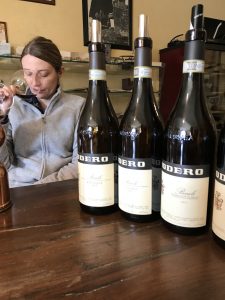
After the tour of the cellar, Isabella tasted me on a few of their wines. I was most excited to be one of the first to taste their Riesling which is a new experiment for them. In one of their vineyards which we could see from the winery, they tore out all the Chardonnay vines and replaced them with Riesling.
Isabelle, sharing the wines of Oddero with me.
The Riesling had a nose straight out of Germany with hits of petrol and rubber boot. It was light on the palate with notes of petrol, mandarin orange and hits of white pepper. I think they are on to something and I’m excited to see how it will evolve. It had just been bottled, so I know it will change a bit over time. We tasted through their reds and I have to tell you that I felt as if I were in Nebbiolo heaven. Although we started with the Barbera D’Alba (which was exceptional) the rest were Nebbiolo.
The 2017 Oddero Langhe Nebbiolo was definitive Nebbiolo. Rust, red flowers and a touch of herbs with earth and strawberry notes lying underneath. This is their entry level Nebbiolo and if you want to know what Oddero is all about, this is an excellent place to start.
Isabella couldn’t say enough about the 2016 vintage. Their 2016 Oddero “Gallina” Barbaresco certainly is a testament to the quality of the vintage. Very aromatic with notes of red flowers, pomegranate and licorice. On the palate it is somewhat open-knit, making it approachable at a young age. Don’t misunderstand me, this baby will age easily for up to twenty years. However, it is friendly now. Notes of tart cherries, pomegranate, red flowers, spices and licorice with just a hint of coffee. Nice expansion on the mid-palate where just a touch of rust lets you know it’s Nebbiolo. Beautiful integration and balance, it begs you to pair it with food. This baby is all about elegance, finesse and old world at its best.
2009 Oddero “Vinarionda” Riserva Barolo
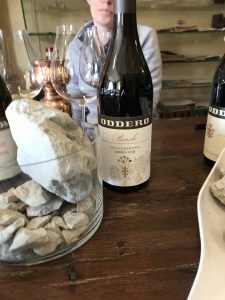
We tasted through several of their Barolo, including the 2015 and 2011 “Brunate”, and the 2015 “Villero”, all Cru vineyards. Their straight up Barolo, which is an incredible value, is a result of blending three Cru vineyards. The topping on the tasting cake was the 2009 Oddero “Vignarionda” Riserva Barolo. With ten years under its belt, it was starting to show the intention of the winemaker. Worn leather, herbs, cherries and pomegrante defined the palate with meaty, refined tannins. Notes of mushroom sneak in underneath with a kiss of coffee bean and hints of fennel. I was amazed at how well this gem was showing its aging potential. It could easily go another ten to fifteen years, although I don’t know if I would have the patience, as it is drinking so incredible now.
I was blown away at the opportunity to visit such an iconic winery in this well-known region of Italy. The chance to taste such incredible wines and meet a seventh generation Oddero is a highlight in my wine career and one I won’t forget.
The moment we started planning our trip to Piedmont and the land of Barolo and Barbaresco, I got butterflies in my stomach. I have long been a fan of this old world wine region. The reds of Barolo and Barbaresco are some of the best in the world and some of the few that find themselves aging in my cellar. Barbera is the staple red of this region and one of the best food wines you will find, with its nice balance of acidity, fruit and earthiness. Dolcetto is also in abundance with Arneis being the most common white wine you will find there.
Castiglione Falletto
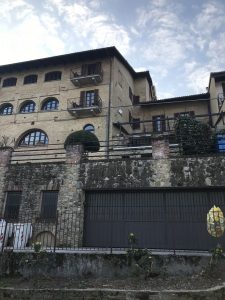
The plan was to visit three wineries while we stayed in Castiglione Falletto, an appellation in the Barolo region with a quaint little village and of course, a tower! Our first winery visit was Vietti.
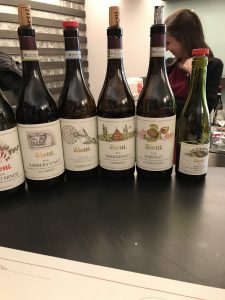
Tasting The Wines of Vietti with Emanuela
Emanuela guided us through the winery of Vietti with her impressive knowledge of the wine region and wine in general. Vietti, like most wineries in the Barolo and Barbaresco region, started off small. Now, with the popularity of the wines growing, Vietti found that their humble beginnings could not keep up with demand for their wines. They built a second winery down the hill from Castiglione Falletto to handle their mainstay wines and devoted the original winery to their vineyard designate Barolo and Barbaresco. Their cellar was impressive, made up of several floors dug underneath the winery. As they grew, they expanded underneath to try and keep up, finding this impossible, thus adding another facility.
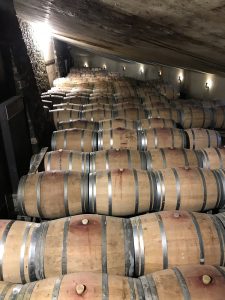
Just one of the many barrel rooms underneath the winery filled with puncheons.
Running out of room!
It was quite interesting to listen to Emanuela discuss the techniques employed by the winemakers. Terms like “submerged cap” was a new one to me. During initial fermentation, a cap is formed on the fermenting grape juice which is either punched down to stir, or they pump from underneath the cap, over the top to break it up. Many wineries in the Barolo and Barbaresco region employ a tactic called submerged cap. At some point during the fermentation process, after punching down or pumping over, they allow the cap to form, then submerge it into the juice for a period of time. The submerged cap is meant to add complexity to the wine that simply punching down or pumping over will not achieve. Nebbiolo is a thick-skinned highly tannic grape but lacks color. Submerging the cap also gives the wine a little more color. Of course, this technique is only used on better vintages.
Another practice that is used throughout this region is the use of 5,000 to 5,500-liter puncheons. Most barrels used in both the new world and old world wine-making are 225-liter barrels or barriques, which is what most of us are familiar with. The larger oak puncheons used in Barolo and Barbaresco are generally used with Nebbiolo after they have been used for aging Barbera which benefits from new oak contact. After being used for a couple of years, they now use them to age Nebbiolo, the grape of both Barolo and Barbaresco. Emanuela explained to us that Nebbiolo, unlike other varietals, does not do well with new oak treatment. Because it is already high in tannins, the new oak just adds more tannins, making it austere and tight. Therefore, they like to age Nebbiolo in neutral puncheons, of which some are used for over 50 years! Why such large and expensive vessels to age the wines? Emanuela explained that they allow very little oxygen to reach the juice while it is aging which is critical since the wine is in barrel much longer than average. By the way, puncheons can run between $14,000 – $25,000 per unit depending on the size. That is a huge investment, and one of the reasons why both Barolo and Barbaresco tend to cost a little more at the store. However, compared to some wines they are a value.
After our tour, Emanuela opened a few bottles for me to taste. I was very impressed with all their wines including a dry and delicious Arneis (one of the best I’ve had), a Dolecetto, Barbera, “Perbacco” Nebbiolo, Barbaresco and Barolo. Keep your eyes open for the 2016 vintage out of Piedmont. The winemakers are very impressed with this vintage, saying it is the best of the millennium so far. The 2016 Vietti “Perbacco” Nebbiolo is proof of that. Excellent balance and integration of fruit, acidity and tannins. It will certainly age but is drinking fabulous now. Notes of strawberries, sour cherries, leather, tobacco and just a touch of rust with a solid backbone of red flowers and a long finish. I have long supported Vietti, and I was glad to have a chance to visit them.
The next day, Susie and I set off for Oddero, one of the oldest producers of Barolo and Barbaresco with their first bottling in 1878. That will be the subject in “The Land Of Piedmont” Part II.
2006 was the last time I set foot in Italy. Back then it was central Italy, and like most people who have visited this country, I fell in love. I’ll never forget walking the streets of Florence, haggling with the street vendors, standing in the cafe to save a few euro on a cup of coffee and eating some of the most outstanding food I have experienced in any restaurant around the world. I had the privilege to tour many wineries back then and one thing sticks in my mind more than all else. Every person who conducted each tour talked extensively about the marriage of food and wine, in particular, the need for protein to counteract the tannins in red wine. However, not one of them offered any type of protein as we drank their Chiantis and other reds until we visited a winery owned and operated entirely by women. It was there that we were offered meat with our red wine.
Back then, wine making in Italy was male dominate. However, this winery we visited (I can’t remember the name…sorry), was an exception to the rule. And wouldn’t you know it, they understood the need to serve protein with their reds. They didn’t just talk about it, they followed through, and it made all the difference. I can still remember how good their Chianti tasted compared to the other wineries we visited, and a lot of it had to do with the meat appetizers they offered as we imbibed. That trip to central Italy was a magical time in my life.
Thirteen years later, I have made it back to Italy and this time it is a visit to the northern part of the country including Turin, Alba and Verona. The excitement is palpable! The first leg of our journey will take us through an area where some of my favorite wines are made. The Piedmont region of Italy is home to Barbera, Barbaresco, Barolo and Docetto as well as Arneis. Barolo and Barbaresco are some of the few wines I will put away in my cellar for many years. The older the better. They have both grace and power, and every once in a while, I will open a young one just to experience old world wine at its best, tannins, rust, strawberries, mushroom and dirt, is the best way to describe what you get from a youthful Nebbiolo, the grape responsible for both Barolo and Barbaresco.
Today, my wife Susie and I are in Turin and will take a look around before we head to Alba and our visit to Vietti, a fantastic producer in the area. We are very excited to check out their winery and taste some of the wines. I will also be visiting the wineries of Pico Macario and Poderi e Cantine Oddero. I will have plenty to write about, and I hope you join me on my journey through this beautiful part of the world, that produces some of the most interesting and well made old world wines. I will also be shooting some video to put up on my YouTube channel. I encourage you to check them out.